
Additive Manufacturing: The Technology Behind 3D Printing
7 min read
25 Aug 2025
 By Neha Jain
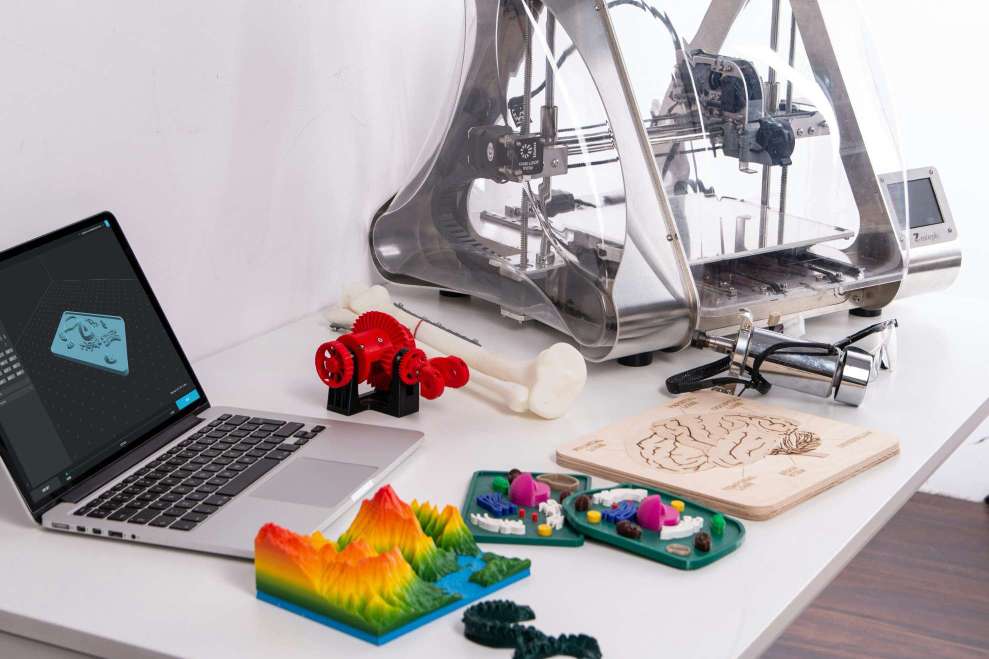
Additive manufacturing, commonly known as 3D printing, is revolutionizing manufacturing processes across industries by enabling the creation of complex designs with unparalleled precision and efficiency. This article explores the principles of additive manufacturing, its applications, and its impact on innovation and production.
Principles of Additive Manufacturing
Layered Deposition: Building objects layer by layer from digital designs using materials such as plastics, metals, ceramics, and composites.
Digital Design: Creating 3D models using computer-aided design (CAD) software or 3D scanners to translate concepts into printable structures.
Material Extrusion: Depositing materials through nozzles or jets, selectively solidifying or fusing layers to form the desired shape.
Post-Processing: Finishing printed parts through processes like curing, polishing, or surface treatments to achieve specific mechanical or aesthetic properties.
Applications of Additive Manufacturing
Prototyping and Rapid Tooling: Accelerating product development cycles by producing prototypes and molds quickly and cost-effectively.
Customization and Personalization: Offering tailored solutions in healthcare (e.g., prosthetics), aerospace (e.g., lightweight components), and consumer goods (e.g., jewelry).
Complex Geometry: Manufacturing intricate designs that are difficult or impossible to achieve with traditional subtractive methods.
Sustainability: Reducing material waste and energy consumption compared to conventional manufacturing techniques.
Impact on Innovation and Production
Supply Chain Efficiency: Shortening supply chains by enabling on-demand production and localized manufacturing.
Design Freedom: Empowering designers to explore novel concepts and optimize designs for performance, functionality, and aesthetics.
Cost Savings: Lowering production costs through reduced tooling expenses, less material waste, and streamlined logistics.
Industry Adoption: Driving adoption across industries like healthcare, automotive, aerospace, and consumer goods to enhance competitiveness and innovation.
Challenges and Future Outlook
Material Diversity: Expanding material options and improving material properties to meet performance requirements and regulatory standards.
Quality Assurance: Enhancing quality control measures and certification processes to ensure consistency and reliability of printed parts.
Scalability: Addressing scalability challenges for mass production and integrating additive manufacturing into existing manufacturing workflows.
Conclusion
Additive manufacturing continues to redefine how products are designed, produced, and delivered, unlocking new possibilities for innovation, customization, and sustainability. As technology advances and adoption grows, additive manufacturing is poised to play a pivotal role in shaping the future of manufacturing and supply chain management.
More Articles

Logistics Technology: The Innovations You Can't Afford to Ignore
4 min read | 01 Sep 2025
Digital Supply Chain: The Future of Logistics and Distribution
6 min read | 31 Aug 2025
Predictive Maintenance: How to Save Millions with AI
4 min read | 30 Aug 2025

Industrial IoT (IIoT): The Backbone of Modern Industry
5 min read | 29 Aug 2025
More Articles
EdTech (Educational Technology): Transforming Classrooms Worldwide
4 min read | 20 Sep 2025

LegalTech: The Future of Law is Digital
5 min read | 19 Sep 2025

PropTech (Property Technology): The Real Estate Revolution
6 min read | 18 Sep 2025

InsurTech (Insurance Technology): How Tech is Transforming Insurance
5 min read | 17 Sep 2025